Winter Workplace Hygiene: Managing Commercial Carpets in the Canterbury Cold
From the wet footpaths of the Christchurch CBD to the industrial hubs of Hornby, Wigram and Woolston, winter brings a relentless influx of moisture, fine silt, and grit into commercial premises, schools, care facilities, and medical centres. The winter months transform commercial carpets from a functional flooring choice into a silent, hard-working, filtration labourer!
Unmanaged winter soiling does not merely make reception areas look tired and smell a little stale; it really does destroy carpet pile, degrade indoor working environments, and accelerates capital expenditure through premature flooring replacement.
Take time for just a five-minute read; you’ll be doing yourself a huge favour if you have a high-level understanding of how dirt accumulates, and an overview of what your cleaning options are. Hint: weekly skims with the vacuum cleaner just don’t cut the mustard!
1. The Mechanics of Winter Soil Accumulation
Winter soil in Canterbury is very different from summer dust. It is a dense, abrasive slurry composed of three primary elements that stick to footwear exceptionally well:
- Liquefied Mineral Silt: Rain, frost melt, and damp soil create fine clay and silt particles.
- De-Icing Compounds and Grit: Coarse gravel, sand, and chemical salts applied to icy footpaths, car parks, and entryway steps.
- Organic Contaminants: Decaying leaf matter, oil residues from car parks, and other accidentally stepped-in organic matter such as food and bird/animal contaminants.
When staff and visitors enter a building, the initial four to six steps deposit up to 80% of these surface contaminants onto the entryway carpet. As traffic moves further into the building—toward lifts, hallways, open-plan workspaces, and coffee machines—the carpet pile continues to take up moisture and residues from shoes.

2. Hunkering Down Complicates Hygiene
From June until mid-September, your workplace may have more people staying indoors for longer, hunkering down for their breaks and lunchtimes, arriving with their wet umbrellas and coats, winter footwear, and sipping on all manner of concoctions to ward off colds and flu.
With thermostats adjusted to suit the most shivery employee, the warmth evaporates the surface moisture leaving behind all the solid particulate matter—outside slurry dries into a fine, concentrated mineral dust; food and drink spills dry off and blacken over time. Traffic lanes look grey—either due to the accumulation of dirt, or because the silty-type soiling is damaging fibres and the light no longer reflects evenly off the distorted pile.
And as if that’s not enough, it’s well known that when the carpet's holding capacity is maxed out, ambient foot traffic re-suspends fine dust, allergens, and spores into the breathing zone, contributing to poor indoor air quality and winter workplace absenteeism.
3. The Answer? A Simple Winter Floor Care Framework
Relying on a standard daily janitorial clean is usually insufficient to handle Canterbury’s winter demands. Commercial cleaning teams are typically equipped for surface litter removal and light vacuuming, not deep soil extraction or the technicalities of fibre maintenance. What’s really needed is a a three-tier defence system.
Tier 1: Soil Isolation (Walk-Off Matting)
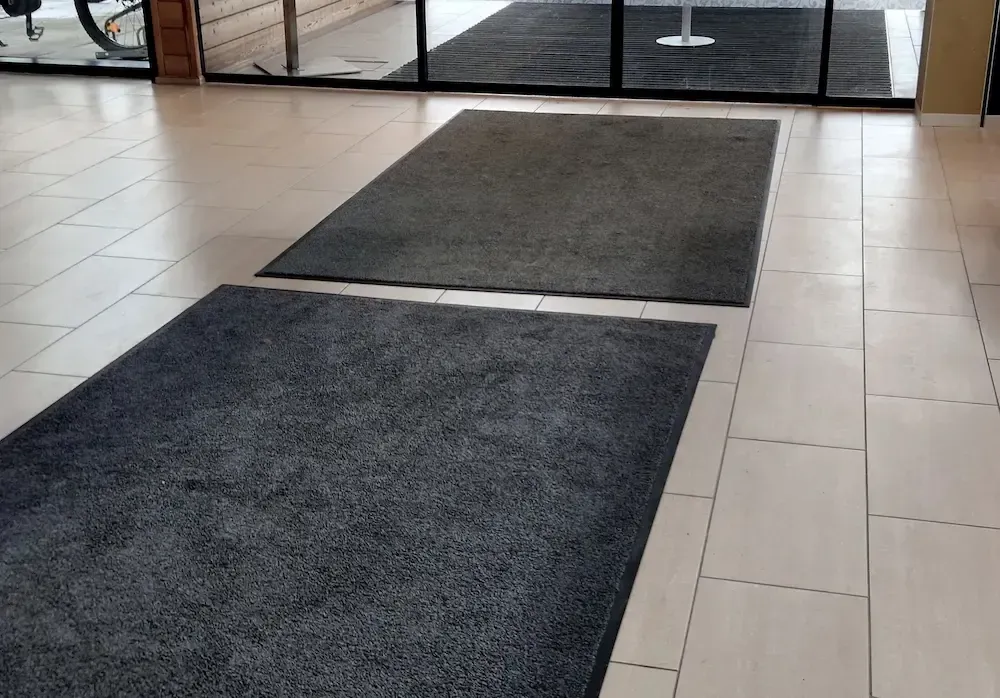
The most cost-effective way to manage winter floor hygiene is to capture soil before it reaches primary commercial carpets.
- The 4-to-6 Pace Rule: Entryway matting should extend at least 4 to 6 continuous strides (approximately 3 to 4.5 metres) from the external threshold.
- Zoned Matting Systems: Use coarse, rubber-backed scraper mats externally to dislodge heavy gravel and mud, followed by absorbent textile mats internally to capture liquid slurry.
- Mat Maintenance: Entry mats must be vacuumed daily and commercially cleaned often; a saturated mat ceases to absorb moisture and instead acts as a transmitter of mud deeper into the building.
Tier 2: Corrective Dry Vacuuming Protocols
Not all vacuuming yields equal results. During winter, vacuuming protocols must shift from speed to dwell time, and ensuring machines are at maximum efficiency.
- HEPA Filtration: Ensure commercial vacuums utilize certified HEPA filtration to prevent fine silica dust from being exhausted back into office air.
- Dual-Motor Agitation: Smooth-suction vacuums are great for where the hole-punch dropped its contents or where biscuit crumbs accumulate but they’re ineffective for removing the stuff that really dirties and damages your carpet. Dual-motor machines with adjustable cylindrical brush rolls and decent suction are essential to get dry particulates out of carpet pile.
Tier 3: Professional Cleaning
When daily vacuuming is bypassing spills and deep-seated soils, professional intervention is necessary to restore the carpet's appearance, filtration capacity and hygiene.
4. Encapsulation vs. Hot Water Extraction
In a busy commercial environment, Facility Managers can’t afford to have office floors damp when staff arrive to work. Liaising with a professional like Advanced Carpet Cleaning to choose the correct cleaning method ensures you balance deep hygienic restoration with rapid drying times.
Low-Moisture Encapsulation Cleaning
Encapsulation technology is an exceptional tool for routine commercial winter maintenance. A specialised polymer solution is applied to the carpet and agitated using a gentle counter-rotating brush machine. The polymer surrounds suspended soil particles and crystallizes as it dries. These encapsulated crystals are then removed by machine, with any left-overs continuing to encapsulate soiling until being removed with routine daily vacuuming.
- Primary Objective: Surface maintenance and appearance management.
- Water Volume Used: Minimal.
- Drying Time: 45 to 90 minutes.
- The Commercial Benefit: Minimal water usage means carpets are completely dry in under two hours, allowing business operations to continue uninterrupted. It is especially well suited to cleaning floors around moisture-sensitive equipment such as medical imaging, and in residential care facilities and other 24/7 operating environments.
Hot Water Extraction (Steam Cleaning)
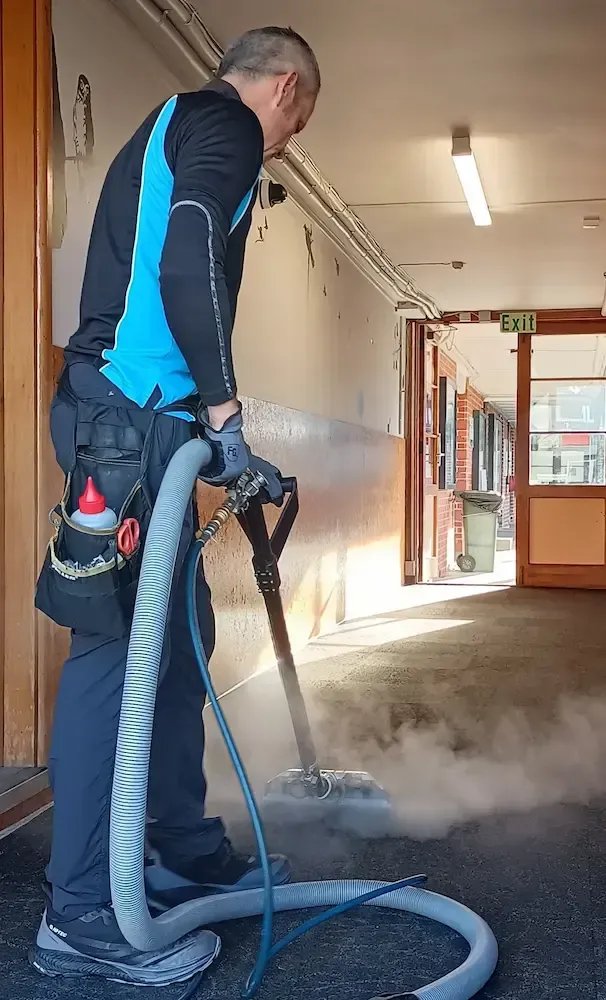
When commercial carpets endure heavy winter soiling, hot water extraction is required for a complete physical reset. (For some premises, using steam cleaning in the most heavily hit areas and low moisture cleaning in other less-needy areas works well.)
By utilizing high-performance, truck-mounted extraction units, precisely heated water is applied to the carpet under pressure. Seconds later, ultra-high-vacuum lift extracts the water, suspended soils, and chemical residues simultaneously. Several repeat passes across heavily soiled areas are usually needed for a good result.
- Primary Objective: Deep hygienic cleaning and reset.
- Drying Time: Dependent on several factors but it can be 4 to 6 hours when supported by commercial air movers; or—without air movers—overnight if the air conditioning or low-level heating is on in the premises.
- Soil Target: Heavy ingrained soils, liquid spills, and organic contaminants.
- The Commercial Benefit: Thorough cleaning and flushing of carpet pile, sanitising and restorative. When combined with commercial air movers, floors are thoroughly dry and ready for foot traffic for the start of the next business day.
5. Five Easy Steps for Facility Managers
To maintain healthy indoor standards and appearance throughout the cold season, we recommend this approach:
- Audit Entryway Capacity: Measure the threshold’s walk-off matting. Ensure a minimum of 3.5 metres of functional matting is deployed at all primary public and staff entrances.
- Verify Commercial Vacuum Standards: Confirm your night-cleaning contractor uses dual-motor, HEPA-filtered vacuum cleaners with motorised brushes, rather than basic domestic units.
- Implement Spot-Cleaning First Aid: Have absorbent cloths handy. Educate staff on how to deal with drinks spills immediately: blot with a dry absorbent cloth, squeeze a little warm water from another cleaning cloth onto the area to dilute the drink liquid, and dab; blot again with the dry absorbent cloth and stand on the cloth to absorb up as much drink and water.
- Schedule an Early Spring Reset: Banish the signs of how your carpet suffered through the winter! A truly clean carpet for the start of spring and summer will make a real difference to the overall look and feel of your workspaces.
- Review Environmental & Safety Compliance: Ensure your floor restoration provider operates with a comprehensive Health, Safety & Environment Policy in place, utilizes quality cleaning formulations and methods to suit your specific needs, and is recommended by trusted Canterbury businesses—see our blog (link to ChCh businesses we look after)
Your Goal This Winter
A clean, dry, and well-maintained commercial space communicates professionalism to clients and demonstrates care for employee health. By understanding the unique demands of a Canterbury winter and adopting a proactive, science-led maintenance strategy, you can preserve the appearance, hygiene, and lifespan of your commercial carpets for years to come.
Tell us below how we can help. Our family-run, experienced team is ready to hear from you.