The Mechanics Of Underlay: Why Softness Underfoot Can Accelerate Fibre Shearing
When investing in new residential carpet, the consumer journey is almost universally driven by tactile drivers—how it feels to the touch, and how it feels underfoot. Homeowners may spend hours poring over fibre swatches, choosing the carpet style, density and colour that promise a transformation of their living spaces. However, a hidden pitfall lies in the selection of the foundational element: the carpet underlay.
There is a common belief in the residential property market that a thicker, softer, more compliant underlay equates to a superior product. It is a logical assumption on the surface—more cushioning should yield a more luxurious experience underfoot. In the vocabulary of textile physics, however, an overly compliant, low-density underlay creates a counter-productive phenomenon known as excessive vertical deflection.
While a cloud-like sensation underfoot feels magnificent during the initial months following installation, this structural instability introduces significant mechanical stress to the carpet’s architecture. This actively accelerates fibre shearing and premature pile degradation.
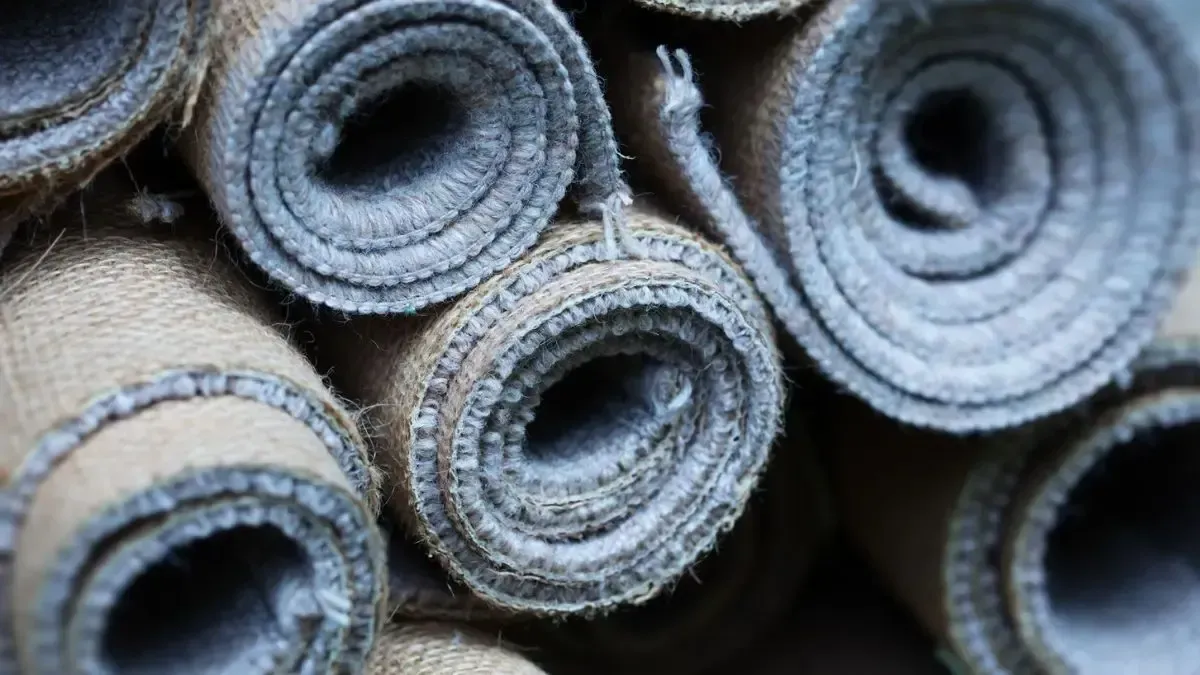
The Anatomy of Carpet
To understand why an ultra-soft underlay compromises a textile, here’s a simple overview of how a modern carpet is engineered. Carpet is a highly calibrated, composite structural matrix consisting of three distinct layers:
- The Face Fibre: The visible pile (whether New Zealand wool, advanced nylon, or synthetic polymers) that is tufted into loops or cut into tufts.
- The Primary Backing: A stable, woven or non-woven membrane (typically polypropylene) that securely holds the initial fibre tufts in place.
- The Secondary Backing & Adhesive Matrix: A heavy synthetic or natural backing bonded to the primary layer using a compounding agent, typically a synthetic latex formulation. This compound provides the "tuft lock"—the physical force required to keep the individual fibres from pulling out or breaking loose under horizontal and vertical traffic.
The Mechanics of Vertical Travel
When a carpet is installed over a solid, stable foundation, the face fibres bear the load of foot traffic through compression. The energy of the footstep is absorbed evenly across the vertical axis of the fibre tuft, allowing the primary and secondary backings to remain perfectly planar and parallel to the subfloor.
When carpet is installed over a soft, low-density underlay, this parallel stability is fundamentally broken. As a person walks across the carpet, the heel strike exerts a localised force. If the underlay lacks the density to resist this load, the backing of the carpet has to flex into the cushion.
This destructive mechanical chain unfolds in three distinct stages:
- The Vertical Impact Phase: The downward thrust of a normal footstep exerts around 30 pounds per square inch onto a small surface area.
- The Lateral Displacement Phase: Lacking foundational resistance from the soft underlay, the carpet’s primary and secondary backings flex downward at an unnatural, severe angle, forming a localised dip.
- The Mechanical Shear Phase: Because the roots of the yarn are locked rigidly within the adhesive latex matrix, the bending places intense lateral tension on the base of the tuft.
In structural engineering, this continuous strain is known as flex fatigue. Over thousands of walking cycles, the synthetic latex bond is weakened, the structural cuticle of wool fibres is fractured, and filaments are sheared cleanly at the base of the backing.

The Sandpaper Catalyst: Weaponised Trapped Silica Grit
The mechanical damage caused by excessive underlay deflection is compounded by environmental factors here in the Canterbury region in the form of heavy, non-soluble atmospheric contaminants—specifically sharp, jagged silica sand, grey stone dust, and alluvial clay brought in from local driveways and garden paths.
Domestic vacuum cleaners are highly effective at clearing light, organic dust from the upper third of a carpet pile. However, they lack the power required to lift heavier silica particles that settle deeper down.
When a carpet rests on an overly compliant underlay, the deep flexing action of the backing opens up the tuft structure during a footstep, allowing these silica shards to slide even further into the foundational roots of the fibre. As the foot lifts and the carpet backing springs back up, the tuft structure closes, trapping the grit tightly against the base of the filaments.
Every subsequent step causes the underlay to sink, flexing the fibre base across these trapped, microscopic razor blades. This process manifests visually as premature thinning or severe pile shedding in high-traffic hallways.
Identifying the Structural Damage: Tracking vs. Soiling
For the untrained eye, the visual manifestation of fibre shearing is frequently misdiagnosed as standard dirt accumulation or "shading." Homeowners often notice that high-traffic lanes appear dark, dull, and completely flattened, assuming a standard clean will restore the upright pile.
However, a professional assessment reveals a more permanent reality:
| Structural Symptom | Cause | Permanence |
|---|---|---|
| Surface Soiling | Soluble oils and superficial dust clinging to the fibre exterior. | Reversible with professional hot water extraction. |
| Pile Shading / Pooling | Fibres bending in conflicting directions, altering light reflection. | Sometimes reversible with specialised mechanical grooming. |
| Fibre Shearing | Physical fracturing and loss of filaments at the primary backing root. | Irreversible. The structural properties are permanently damaged. |
When fibre shearing occurs due to underlay failure, the carpet loses its structural resilience. The weakened tufts can no longer stand upright to catch and reflect light evenly. Instead, they fold over permanently, creating a frayed surface texture that scatters light in chaotic patterns. This light-scattering damage creates a permanent shadow across your floor that no amount of cleaning can reverse.
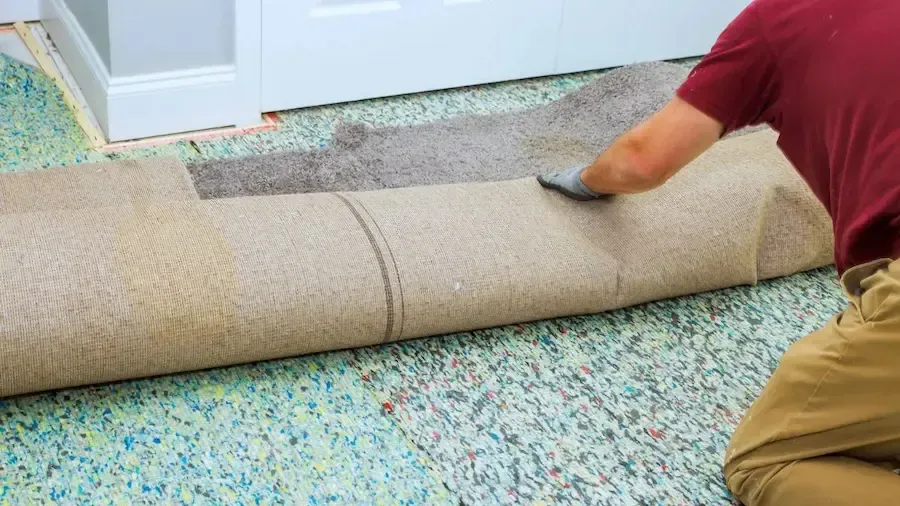
The Scientific Solution: Density Over Dimension
To safeguard your interior investments and ensure your carpet achieves its full engineered lifespan, carefully consider underlay selection—it’s not something you can skimp on now and upgrade easily later.
- Prioritise Mass Density: Look for high-density polyurethane or rubber underlays with a high mass rating per cubic metre, rather than focusing solely on thickness. A dense 9mm underlay offers significantly better structural support and longevity than a highly compliant 11mm or 12mm low-density variant.
- Control the Deflection Guide: The ideal underlay should act as a shock absorber, not a mattress. It must provide enough resistance to prevent the carpet backing from flexing beyond its elastic threshold under localised heel pressure.
- Maintain Structural Pile Integrity: Regular, specialised professional maintenance is vital. Professional hot water extraction removes grit that accelerates shearing and cleans fibres to keep carpet looking its best for its whole product life.
Before you finalise your residential specifications or attempt to address a flattening carpet, remember that the foundation dictates the longevity of the surface.
Our team provides the expert, technical assessments your home deserves, ensuring your textile investments remain stable, hygienic, and structurally sound for decades to come.