How to Protect Carpets and Upholstery from Christchurch Summer UV
Why Canterbury Sunlight Bleaches Wool, Bakes in Body Oils, and How to Prevent Permanent Textile Damage
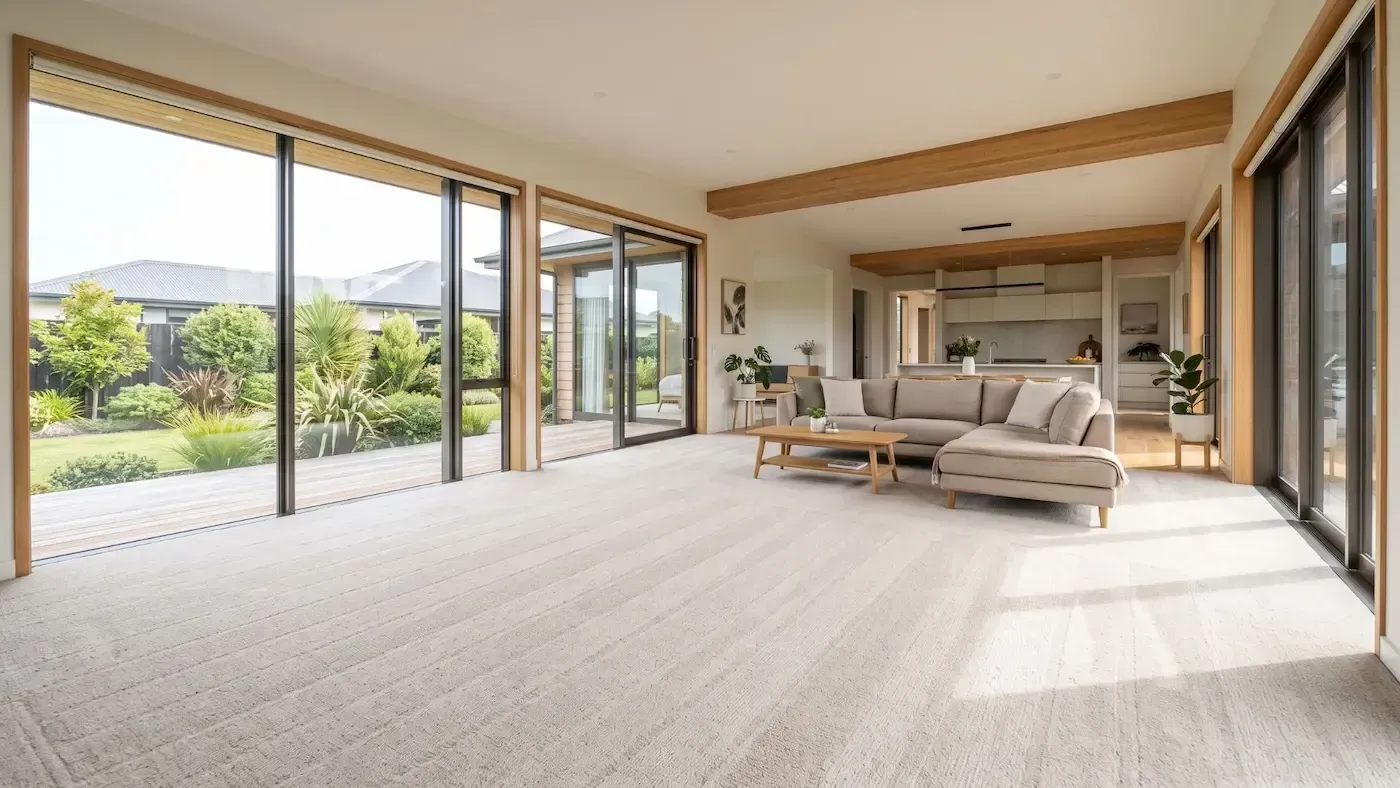
There are few things more welcoming than opening up ranch sliders and letting Canterbury’s warm summer sun stream across the living room floor. Our long daylight hours and indoor-outdoor lifestyle are central to Kiwi living, but that glorious natural light carries a hidden cost for interior textiles.
While natural sunlight lifts our mood, New Zealand’s extreme ultraviolet (UV) radiation inflicts permanent damage on carpets, rugs, and lounge suites. Ignorance is costly: once natural wool fibres or upholstery dyes are bleached by the sun, no amount of professional cleaning can reverse the colour loss and brittleness.
Understanding how Southern Hemisphere solar radiation degrades interior fibres—and taking proactive protective measures before peak summer arrives—is the only way to safeguard your home’s most expensive furnishings.
Why is summer UV damage to carpets and furnishings worse in New Zealand?
Summer UV damage to interior furnishings is worse in New Zealand because peak solar radiation levels are roughly 40% higher than at comparable latitudes in the Northern Hemisphere. Three distinct atmospheric and geographical factors create this intense solar environment across Canterbury:
- Earth’s Elliptical Orbit: The Southern Hemisphere sits roughly 3.4% closer to the sun during our summer months (December to February) than the Northern Hemisphere does during its summer, producing an automatic 7% increase in solar intensity.
- Seasonal Ozone Depletion: The Antarctic ozone layer thins naturally over the Southern Hemisphere during late spring and early summer, allowing higher concentrations of damaging ultraviolet wavelengths to reach ground level unhindered.
- Exceptional Atmospheric Clarity: Canterbury’s clear, unpolluted skies lack the dense industrial smog and heavy particulate haze found over parts of Europe, Asia, and North America. As a result, solar radiation penetrates directly to ground level with little atmospheric filtering.
Even on overcast days across Christchurch, between 80% and 90% of ambient UVA radiation passes straight through light cloud cover.
How does UV radiation permanently destroy carpet and upholstery fibres?
Ultraviolet radiation destroys carpets and upholstery through photodegradation—a chemical process where high-energy light waves shatter the molecular bonds within textile dyes and structural polymer chains. This causes progressive dye bleaching, surface yellowing, and severe fibre embrittlement.
| Feature / Effect | UVA Radiation (315–400 nm) | UVB Radiation (280–315 nm) |
|---|---|---|
| Penetration Depth | Penetrates deep into the carpet pile and backing | Concentrates primarily on the surface of the fibre |
| Window Glass Behaviour | Passes straight through standard double glazing and residential glass | Blocked almost entirely by standard residential window glass |
| Textile Damage | Breaks down internal dye molecules and structural protein polymers | Causes direct surface burning and bleaching |
| Visible Symptoms | Surface yellowing, loss of elasticity, fibre brittleness, and breakage | Rapid colour loss and bleaching in areas exposed to open ranch sliders |
Standard double glazing in modern Christchurch homes effectively filters out surface-burning UVB rays, but ordinary window glass offers virtually no defence against longer UVA rays.
As UVA radiation hits natural 100% New Zealand wool carpets or delicate sofa fabrics, it weakens the internal protein matrix. The fibres gradually dry out, lose natural elasticity, and become brittle. Over time, high-traffic zones exposed to daily sun do not simply fade—the weakened fibres fracture and snap off under everyday foot traffic, creating irregular, bald patches.
Why you should clean carpets and sofas before peak summer arrives
A widespread misconception among homeowners is that professional cleaning should wait until after summer is finished. In reality, allowing accumulated winter contaminants to sit in sun-drenched rooms throughout December and January accelerates permanent fibre destruction.
The "Baked-In" Soil Phenomenon
Throughout autumn and winter, household upholstery and carpets quietly collect airborne soot from log burners, microscopic dust, pet dander, and body oils from bare skin and hair.
When high summer temperatures hit north- and west-facing rooms, the heat and UVA radiation together act as a chemical catalyst. The sunlight effectively bakes these oily residues, bonding them onto the wool cuticles and fabric weaves. What could have been easily emulsified and extracted in November oxidises under the summer sun, turning yellow-brown and chemically bonding with the fabric dyes.
What Professional Cleaning Can—and Cannot—Do
Transparency is essential when assessing sun-affected textiles:
- What professional cleaning CAN do: A thorough truck-mounted hot water extraction clean removes abrasive sand, acidic body oils, and sticky residues, and restores pile and fabric hygiene.
- What professional cleaning CANNOT do: Steam cleaning cannot put colour or ‘bounce’ back into brittle, bleached carpet or fabric. When UV rays break dye bonds, the pigment is gone permanently.
To preserve the appearance of your flooring and furniture, schedule your professional carpet cleaning in Christchurch and upholstery cleaning in late spring, flushing out catalytic oils before the summer heat takes hold.
The Pre-Summer Sun-Check: Protecting North- and West-Facing Rooms
Take these practical, preventive steps to shield vulnerable living areas before Canterbury’s summer heat peaks:
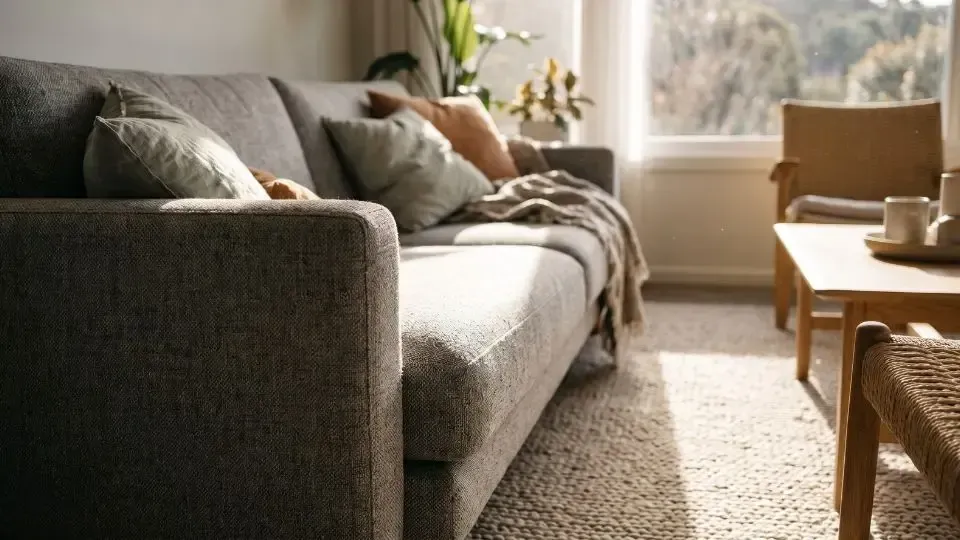
- Inspect High-Risk Glass Boundaries: North- and west-facing floor-to-ceiling windows, corner sliders, and skylights present the highest solar load. Ensure curtains, sun-filtering roller screens, or modern UV-rejecting window films are used during peak sun hours (between 11:00 am and 4:00 pm).
- Rotate Fine Wool Rugs Regularly: If you have hand-knotted or wool area rugs positioned near ranch sliders, rotate them 180 degrees every few months to distribute solar exposure evenly and prevent harsh, one-sided fade lines.
- Shift Moveable Furniture Angles: Reposition modular lounge suites slightly to ensure one armrest or back cushion does not absorb the full brunt of western sun day after day.
- Address Outdoor Patio Cushions: Outdoor fabrics are engineered for UV resilience, but trapped dust, airborne pollen, and BBQ grease accelerate sun degradation. Clean outdoor suites thoroughly before holiday entertaining begins.
Does MicroSeal Organic protect against permanent UV fading?
MicroSeal Organic’s nanotechnology-based formula provides a reduction in damage-causing UV exposure.
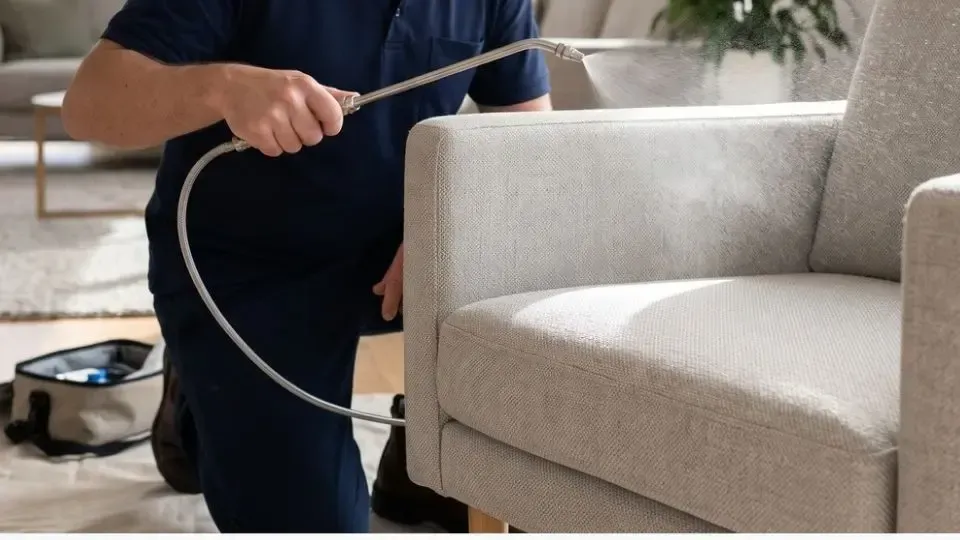
While conventional supermarket fabric sprays coat only the exterior of yarns and wear off quickly, MicroSeal’s superior formulation provides UV resistance for many years, assuring a slowed rate of UV degradation and extra years of uncompromised pile or fabric integrity.
Key Benefits of MicroSeal Organic Protection:
- Substantial Sun-Fade Reduction: Significantly slows down solar bleaching, protecting sensitive wool dyes and designer fabrics from Canterbury’s UV.
- Sustained Protection: No protection product lasts forever, but MicroSeal Organic remains in play for many years and through professional maintenance cleans.
- Zero Texture or Breathability Change: Leaves 100% New Zealand wool, linen, velvet, and leather as soft and supple as the day they left the showroom.
- Buys You Time: Provides crucial reaction time to blot up spilled drinks, coffee, or pet accidents before they become permanent, working hand-in-hand with professional carpet stain treatment and upholstery cleaning.
- Non-Toxic & WoolSafe Certified: Fully non-allergenic, non-toxic, and certified safe for homes with crawling infants and pets.
Protect your flooring and furniture before the summer rush
Sunlight does not discriminate. Whether illuminating an antique wool rug in Merivale or a contemporary fabric sofa in Cashmere, Canterbury’s summer sun will silently bleach exposed fibres unless preventive action is taken.
Early intervention is your most cost-effective defence. By pairing a pre-summer deep clean with long-lasting MicroSeal Organic fabric protection, you preserve the colour, texture, and financial value of your home’s furnishings for years to come.
Protect your carpets and upholstery before summer takes hold.
Call Kerry and the family team on 0800 566 576 to arrange an on-site assessment, or book your pre-summer textile clean and MicroSeal protection online today.