The Secret Language of Labels: A Homeowner’s Guide to Care Symbols
We’ve all experienced the despair of seeing – in full cinematic slow motion – the dog quietly up-chucking on the rug, or as that huge slice of pizza toast becomes airborne for a moment before landing face-down on the couch.
As shrieks of blame ring out through the house, you search for the care label – and you deserve Brownie points for even remembering to look for the care label first! But instead of clear English instructions, you’re met with a cryptic series of dots, triangles, and squares that look more like an ancient hieroglyphic script than a cleaning manual.
Ah, yes, the Secret Language of care labels! With over 40 possible symbols, it takes a clear head to evaluate precisely what they mean before you do anything else.
Care labels are the manufacturer’s “Rosetta Stone”. They record your item’s composition, how to look after it, and what will destroy it. And it amounts to full disclosure: as improper cleaning usually voids your manufacturer’s warranty. If you ruin a $5,000 rug because you ignored a "Do Not Wash" symbol, the manufacturer is under no obligation to help you.
Here is your definitive guide to decoding carpet, rug and furniture care symbols in New Zealand.
Why the Care Label Must be Your First Port of Call
Modern flooring and upholstery fabrics are marvels of textile engineering. Whether it’s a high-grade New Zealand wool, a sophisticated heat-set polypropylene, or a luxurious blend of plant fibres, their manufacture is complex. Specific dye methods and structural finishes, plus strengths and susceptibilities mean they need the right care.
Here’s where “she’ll be right” can go so very wrong and can cause permanent, irreversible damage:
- Fibre Distortion: Too much heat can shrink or shrivel synthetic fibres. Too much agitation can split fibres and cause a permanent fuzzy top layer.
- Dye Bleeding: The wrong pH level in a cleaner can unlock some dyes, causing colours to run into one another.
- Browning: Natural fibres like wool or some plant fibres can turn a permanent rusty brown if they are left too wet or treated with high-alkaline products.
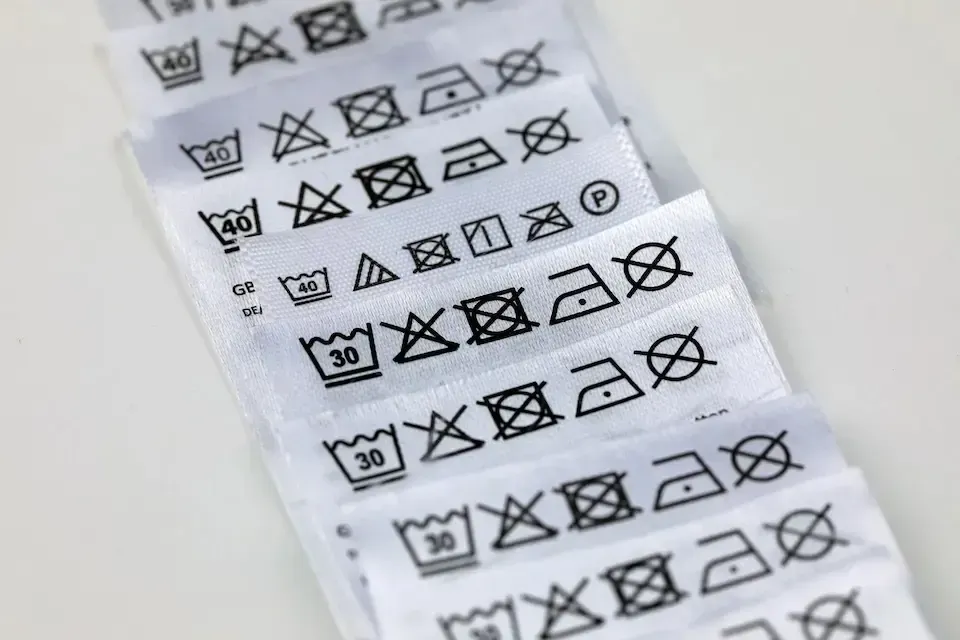
Deciphering the Code: Your Care Symbol Dictionary
Care symbols are generally divided into five categories: Washing, Bleaching, Drying, Ironing, and Professional Care. The symbols are largely standardised internationally.
1. The Washing Tub (Water Temperature and Method)
The symbol that looks like a bucket of water tells you how the item handles moisture.
- A Tub with a Hand: This means "Hand Wash Only." This may be due to its construction and indicates the item will not tolerate the mechanical agitation of machine washing or the powerful extraction of steam cleaning (hot water extraction).
- A Tub with a Number: The number inside (e.g., 30, 40) represents the maximum water temperature in Celsius. Or you may see dots instead of numbers: a single dot denotes cold wash, two dots indicate warm wash, and three give permission for hot washing.
- A Tub with a Cross Through It: This is the most common symbol for rugs and fabrics containing a blend of fibres when some or all of them are sensitive to moisture. It means "Do Not Wash." It signifies that the item should never be submerged in water, nor ‘wet cleaned’ such as by steam cleaning.
2. The Triangle (The Danger Zone for Desperate DIYers)
The triangle represents bleaching. For most Christchurch homes with wool carpets, rugs and furnishings, this is the most critical symbol to watch.
- An Empty Triangle: Bleaching is allowed.
- A Triangle with Two Diagonals: Use only non-chlorine bleach.
- A Solid Triangle with a Cross: "Do Not Bleach." Most supermarket stain removers contain oxidising agents that act like mild bleach. If you see this symbol, those sprays could permanently yellow or "white out" your carpet, rug or fabric.
3. The Square (Drying)
How an item dries is just as important as how it is cleaned.
- A Square with a Circle Inside: This represents a tumble dryer. If it has a cross through it, keep it far away from heat.
- A Square with Vertical Lines: "Drip Dry."
- A Square with a Horizontal Line: "Dry Flat." This is common for wool rugs. If you hang a wet wool rug over a clothesline, the weight of the water will stretch the backing, leaving you with a rug that may not ever sit flat on the floor again.
4. The Circle (The Professional’s Code)
This is the symbol that may matter more to us Advanced Carpet Cleaning than to you! The circle tells a professional cleaner exactly what chemistry we can use.
These products should only be used by a professional who can manage the associated requirements and risks.
- A Circle with a ‘P’: This stands for Perchloroethylene. It tells the professional that the item can be cleaned with standard professional solvents.
- A Circle with an ‘F’: This stands for Flammable. It means the item is extremely delicate (often specialty synthetics or rayons) and requires a specific, petroleum-based dry-cleaning solvent.
- A Circle with a Cross: "Do Not Professionally Dry Clean."
Don’t Guess, Check: Why DIY is a Gamble
The biggest risk with those cryptic symbols is the "I think I know what that means" factor. This approach often ends in tears, with irreversible damage happening right before your eyes.
The people who made your carpet, rug or furniture fabric want it to last for twenty years, maybe longer. They know the thresholds for the glues, seams, tassels, dyes, twists, loops, weaves and fibre blends, and the care symbols tell you all you need to know.
Steve Jobs may not have had home furnishings in mind, but his words still fit: “Details matter. It’s worth getting it right.”
The New Zealand Factor: We Love Wool
In Christchurch, we have a deep love for natural fibres. We are a "wool-first" city, with many homes featuring beautiful products from local icons like Bremworth or Feltex.
When you see the WoolSafe logo alongside these symbols, it is a reminder that the manufacturer has certified that only specific, neutral-pH products should be used. Using a generic "heavy duty" cleaner on a NZ wool carpet can permanently distort its look and feel.
Your Care Label Checklist
Next time you’re faced with a spill or planning a spring clean, follow this three-step protocol:
- Find the "Rosetta Stone": Locate the care label (usually on the underside of a rug’s corner, under the couch cushion or frame, or on your carpet’s product information provided at purchase).
- Decipher Correctly: to be sure of your next steps refer back to this guide, check your product care information on your retailer’s website, or Google to find the exact same symbol and its meaning.
- If in Doubt, Leave it Out: If you see a circle with a letter in it, or a tub with a cross, put the supermarket spray back in the cupboard. Those symbols are a direct request from the manufacturer for professional intervention.
Let the Experts Translate for You
You don't need to be a textile scientist to have beautiful, clean carpets and furnishings. You just need to know when to call someone who is.
At Advanced Carpet Cleaning in Christchurch, our technicians are trained to read the myriad of care symbols we encounter. We don't just clean; we assess the fibre, check the care symbols, and match our chemistry to the manufacturer’s requirements. Whether it’s a delicate hand-woven rug, the family couch, or a sturdy carpet, we ensure your warranty remains intact and your fibres stay protected.
Don’t play "guess the symbol" with your home’s most expensive furnishings. If your care label has you confused, give the experts a call on 0800 566 576. We’ll provide a professional clean that respects the science of your carpet.