It’s time to come clean: why your kitchen tiles still look dirty
Can you relate? Your tiles look and feel like they need a clean, so today’s the day. You sweep first, fill a bucket with hot water and floor cleaner, and spend twenty minutes mopping the tiles until they shine.
You stand back, and it looks fantastic.
But as it dries, you notice that the grout lines in the high traffic areas still look much blacker than other parts of the room. And the tiles themselves look a bit dull or hazy. They look better, but not that clean.
If this sounds familiar, don't worry—it’s not you. It’s due to the nature of porous materials, and the misconception that tiles are easy to keep clean.
But the reality is that tile and grout floors are some of the stubbornest surfaces in the home. Here is why your mop and bucket won’t get the job done, and why professional tile cleaning in Christchurch is becoming just as popular as carpet cleaning.
The mop paradox: are you cleaning or just "painting"?
Let’s be honest about what a mop actually does.
When you mop a floor, the hot water and cleaning solution dissolves surface dirt into a thin slurry. You keep mopping – moving the slurry around. Then the dirty mop goes back into the bucket – several times over the course of the clean – and by the end of the job you’re impressed with how dirty the water is. But it’s the same water you’ve been ‘rinsing’ your mop in for the last half of the clean!
Think of it like this: if you dripped bacon fat on your benchtop, you wouldn't wipe it with a sopping, soapy sponge and then just leave the bench wet, would you? You would rinse the sponge, and wipe again to pick up residual grease and dry the bench.
But with mopping, we may think the job’s done when we’ve mopped the room and we leave it to air dry. When the water evaporates, the dirt, grease, and chemical residue that was suspended in the leftover water settles back down onto the floor.
Worse, it settles in the lowest and most porous points: the grout lines.
Essentially, mopping often amounts to "painting" your floor with a thin layer of grey water. Over months and years, this creates a build-up that standard household cleaners simply cannot shift.
The science of grout (and what that means for your kitchen)
The tiles themselves are usually glazed and (relatively-speaking) non-porous. Their tiny grooves and pits are what make them non-slip and safer in wet areas, and dirt will definitely collect in those crevices. But professional cleaning – using equipment and products designed especially for hard floors – can revive tiles to look like new again!
So, oftentimes the tiles are the easy part. The real villain in this story is the grout.
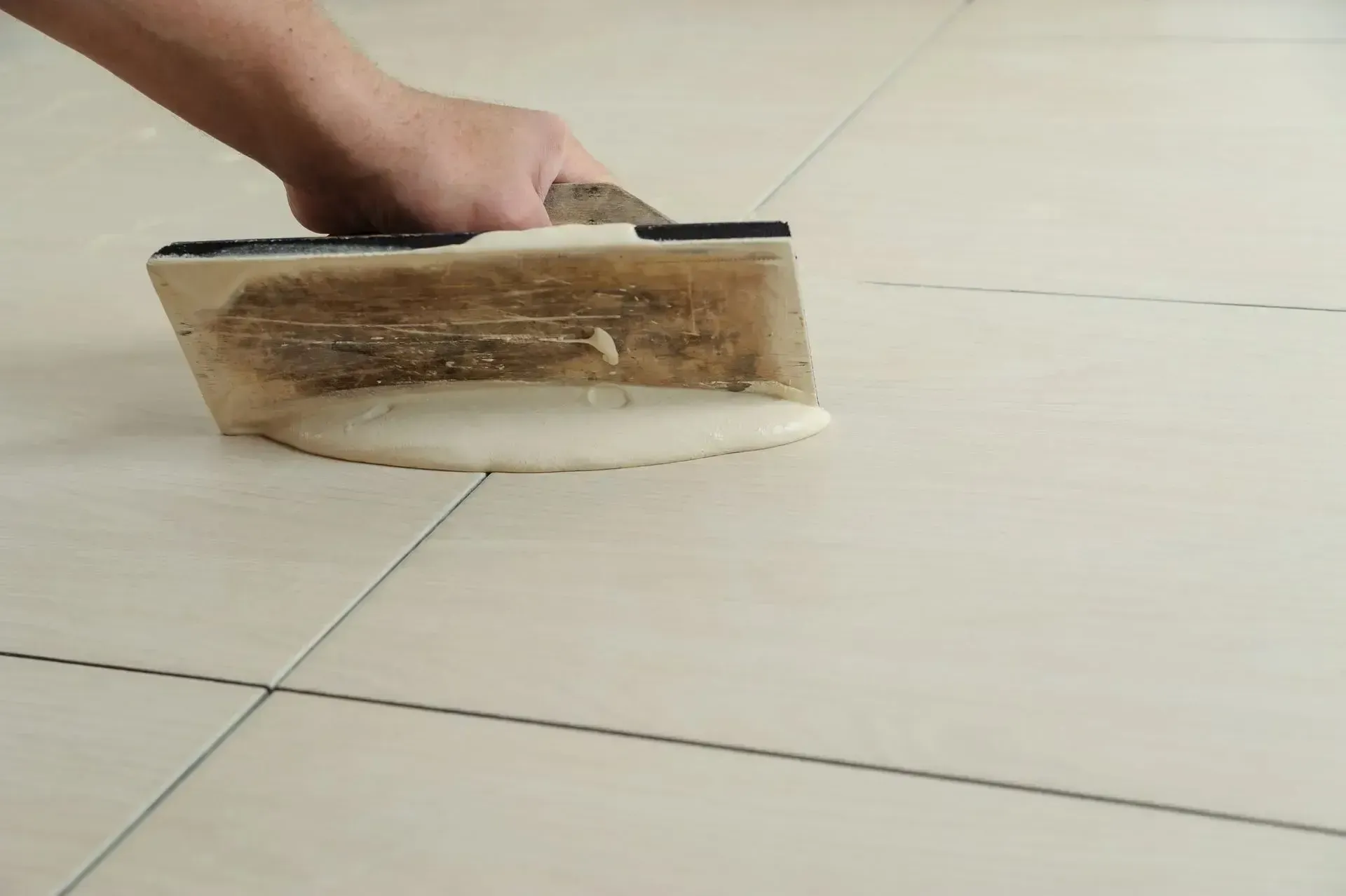
Grout is essentially a mixture of fine sand and cement. Unless it has been recently and professionally sealed, it is highly porous. If you look at grout under a microscope, it looks like a hard sponge or a piece of honeycomb. It is full of tiny holes and crevices.
In a kitchen environment, these holes are a trap for:
- Cooking oils and grease that become airborne when you fry food.
- Sugary spillages, such as juice, wine, sauce.
- Outdoor dirt tracked indoors.
When you mop, the dirty water flows into these microscopic grout pores. The mop head glides right over the top. If the grout wasn’t dirty already, moving dirty water into grout lines will sure as all heck make it dirty! Over time, this trapped dirt turns your lovely light grey or white grout into an unsightly black grid.
This is why scrubbing on your hands and knees with a grout brush creates a clean spot—you are physically agitating the dirt out of the pores—but let’s be real: nobody has the time or the knees to do that for an entire kitchen, let alone all the other tiled areas!
The chemical trap: sticky floors attract more dirt
Here is another common scenario we see at Advanced Carpet Cleaning. Folks may feel their floor isn't getting clean, so they buy a stronger, "heavy-duty" supermarket floor cleaner. And they use an extra generous splash in the bucket.
What’s the problem? Residue.
Most domestic floor cleaners contain surfactants (soaps) that are difficult to rinse away completely (without a hose!). When these soaps dry on the tile surface, they leave a slightly sticky film.
You can often feel this if you walk barefoot; the floor feels tacky or makes that telltale sound as you lift your foot.
This sticky film holds onto the dust, pet dander, and food debris that lands on the floor. Some of it will vacuum or sweep up next time you’re giving it a flick over, but small particles will remain stuck to the floor. By trying to wet clean better with stronger chemicals, you end up having to clean it more often, thus compounding the ‘dirt magnet’ problem!
The professional difference: how we restore the shine
So, if mopping pushes dirt into the grout, and chemicals leave a sticky residue, what is the answer?
The answer is the same principle we use for carpets, adapted for hard surfaces: Product, Agitation, Heat and Extraction.
As experts in tile and grout cleaning, we use specialized equipment that goes far beyond what a steam mop can do. It’s not magic; it’s industrial engineering.
Step 1: Alkalinity to break the bond We start by applying a professional-grade alkaline pre-spray. Unlike supermarket cleaners, this is designed to break down the molecular bond of grease and oils. It "eats" through the layers of cooking fat and old soap residue that have built up over the years.
Step 2: The "agitator" tool This is the game-changer. We use a specialized hard floor tool (perfect for tiles and for vinyl) that works the product into the crevices. The black slurry sits on the surface briefly, until the next machine takes over.
Step 3: Rinse and extraction And here’s the biggest difference. Using the heat and extraction from our truck-mount equipment, very hot water is sprayed at pressure directly onto the tile before being immediately extracted. The high pressure forces the hot water into the pores of the tile and the grout, flushing out the dissolved dirt that a mop can’t reach, and then extracted away.
All the water and all the slurry are lifted straight off the floor. Gone!
The result? The tiles are beautifully clean to look at and to touch. There’s no sticky residue. And most satisfyingly, the grout lines will look much closer to their original colour, and feel clean.
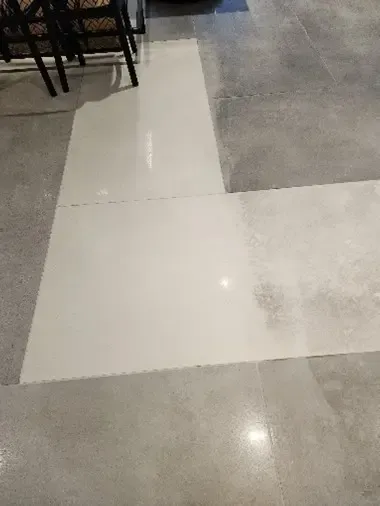
Take a look at the way these grey and cream tiles are coming up during cleaning – you can’t get those results with a mop!

The final shield: sealing the deal
Once we have restored your floor to its new glory, we highly recommend one final step: Grout Sealing.
Remember how we said grout is like a sponge? A sealer acts like a raincoat for that sponge. Grout generally needs re-sealing every couple of years in a kitchen environment and more often in wet areas.
We can apply a penetrating sealer that soaks into the grout lines. It fills up those microscopic pores so that when you spill a glass of red wine or drop some olive oil, the liquid sits on the surface rather than soaking in. This window of "reaction time” means you can wipe up the spill before it becomes a permanent stain. It also makes your future mopping much more effective, because the dirt can’t hide deep in the grout anymore.
Don't replace it—restore it
We have lost count of the number of customers who have told us they thought they’d have to replace their tiled floor because it looked so "old and dingy."
Nine times out of ten, the tile is fine. It is just hiding behind many years of soil and residue build-up, and dirty grout. Replacing a tiled floor is a massive, dusty, expensive renovation job. Restoring it with a professional clean is a tiny fraction of the cost and can be done in a few hours.
And it’s not just for kitchens. Entryways, bathrooms, conservatories, reception areas, cafes – a professional deep clean can transform the look of your hard floors.
Ready to see your tiles look beautiful again?
Put down the grout brush and save your knees. Call Advanced Carpet Cleaning on 0800 566 576. We will get your tiles sparkling, your grout clean, and your home feeling fresh again.